
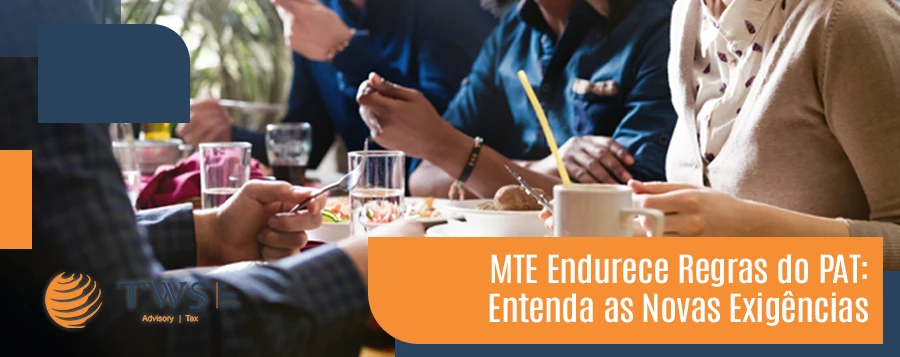
The Ministry of Labour and Employment (MTE) has published Ordinance No. 1,707/2024, which establishes stricter rules for the Workers' Food Programme (PAT). The measure aims to correct misuse of the programme, ensure that the benefits are used in accordance with their objectives and increase competition in the meal voucher and food voucher sector. In this article, we detail the main changes, their impact on contracting companies and operators, and how companies should prepare to remain compliant.
What Changes with the New PAT Ordinance
The new Ordinance prohibits companies participating in the PAT, including those that contract meal voucher and food voucher services, from receiving any form of rebate or discount. This includes discounts offered through parallel contracts related to the food benefit. This change seeks to eliminate practices that distort the purpose of the programme and ensure that the funds earmarked for the PAT are used exclusively to promote proper nutrition for workers.
In addition, the Ordinance clarifies that the term "promotion of health and food security" in Decree 10.854/2021 refers strictly to the promotion of healthy eating or food and nutrition education actions. As such, other practices and services, such as physical activities, health plans, aesthetics, qualification courses and other benefits that are not directly linked to food, do not fall within the scope of the programme.
Revision of Existing Contracts and Consequences
With the new regulations, PAT beneficiary companies and food benefit operators must review their contracts to ensure that they comply with the new guidelines. Contracts that do not meet the new requirements cannot be renewed, which requires a detailed analysis and, if necessary, the restructuring of agreements to ensure adherence to the rules.
Failure to comply with the new requirements can result in severe penalties for companies. The fines range from R$ 5,000 to R$ 50,000, and this amount can be doubled in cases of repeat offences. In addition, the company may have its registration in the programme cancelled, which would make it impossible to continue using the PAT and the associated tax benefits. This demonstrates the importance of careful analysis and rapid adaptation to the new guidelines in order to avoid financial and operational losses.
How Companies Should Prepare for the New Rules
To stay in compliance with the new Ordinance, companies participating in the PAT need to adopt a proactive approach. The first step is to carry out an internal review of the contracts signed with food benefit operators to ensure that there are no clauses offering discounts or rebates that violate the new regulations. In addition, it is essential to ensure that all practices are aligned with the concept of health promotion and food safety, as defined by the new Ordinance.
Companies should also seek specialised advice to ensure that all changes are implemented correctly and on time. Having the support of a specialised consultancy, such as TWS Consultoria, can be an important differentiator. Our experts help companies review contracts and practices, ensuring compliance and avoiding legal sanctions.
How TWS Consulting Can Help Your Company
TWS Consultoria offers specialised services to help companies adapt to the new PAT requirements. With our experience in compliance and benefits management, we help review and adjust contracts, as well as offering guidance on how to maintain practices that respect the new guidelines imposed by the MTE. Our aim is to ensure that your company continues to use PAT benefits safely, avoiding fines and deregistration.
Conclusion
The new PAT regulations imposed by the MTE reinforce the need for companies that use food benefits for workers to review their practices and contracts. With severe penalties for non-compliance, it is essential to act quickly and ensure that all operations are in line with legal requirements. Relying on the support of specialised consultancies such as TWS is an effective way of ensuring compliance and taking advantage of the fiscal and operational benefits that PAT offers in a safe and responsible manner.



 EN
EN  PT
PT  ES
ES